

Reconfiguring for a new age in streaming and digital media.
Atlanta News First Rebrand 2022
Out with the Old & In with the New: Rebranding news for the digital and streaming era
Exploring a rebrand: Take a look at my design contributions
When you think about your local news station, what adjectives comes to mind?
Maybe the words “dated,” “boring,” and/or “unnecessary” come to you. You wouldn’t be alone in those types of associations. In the past decade, televised and cable news has had a difficult time competing with the instant information era of the internet, social media, and streaming. When Gray Media Television took over ownership of CBS 46—a local CBS station in Atlanta, Georgia—in 2021, they came in with the intent to revolutionize what local news meant. They wanted to emphasize community values and concerns, focus on non-bias reporting, and engage with a wider audience overall. That is how Atlanta News First (WANF) came to be and how their rebrand revitalized an increasingly undervalued part of the metro-Atlanta communities.
Redefining what local news is compared to what it was
Before I open any design applications, my first step, especially in a rebrand, is to do a little research. Knowing about the subject, products, services, and company are essential to help identify their role/purpose, their values, and their goals. If you go in without proper research and background leads to making assumptions and building off inaccuracies, ultimately creating mistrust and disapproval.
In this brand’s case, the subject is news, specifically local news. Methods of communication to distribute information to members of communities has played a significant role in human history, and in the United States of America, even became a huge influence during a pivotal time in history—The Revolutionary War. Now, we’ve come far from printing press editions of Thomas Paine’s Common Sense, so let’s focus on the past 120 years.
Early 1900s
Printed news is the main format of staying informed about the world, from one’s neighborhood to the global level.
News Media (1900-2025)
1910s-1940s
Printed news is still popular and radio has enabled the public to stay informed away from home.
1950s-1990s
Television becomes a common household amenity in America. News stations switch from radio waves to television screens.
2000s-now
While television news still remains popular in the early 21st century, the past decade has seen a surge in online and digital forms of news.
As the famous song goes, “video killed the radio star,” and in the case of news media, “radio killed print, video killed radio, and now digital/internet killed television.” The significance of this is that what is happening to news right now, has happened before, many times. So the first misconception to eliminate is the idea that things die rather than evolve. Though we no longer use stone slabs to keep records, thousands of years ago, it was revolutionary. That is how I framed the evolution of local TV news—rather than saying “it’s dead and gone,” local news is evolving to be more relevant in a new era of human history.
We are not building from nothing, but simply building from the foundation of what was already in place. We have simply expanded on how to reach audiences by creating formats that are inclusive of how differing generations stay connected to what goes on in the world.
Out with the old and what is incompatible with today’s trends, views, and technology
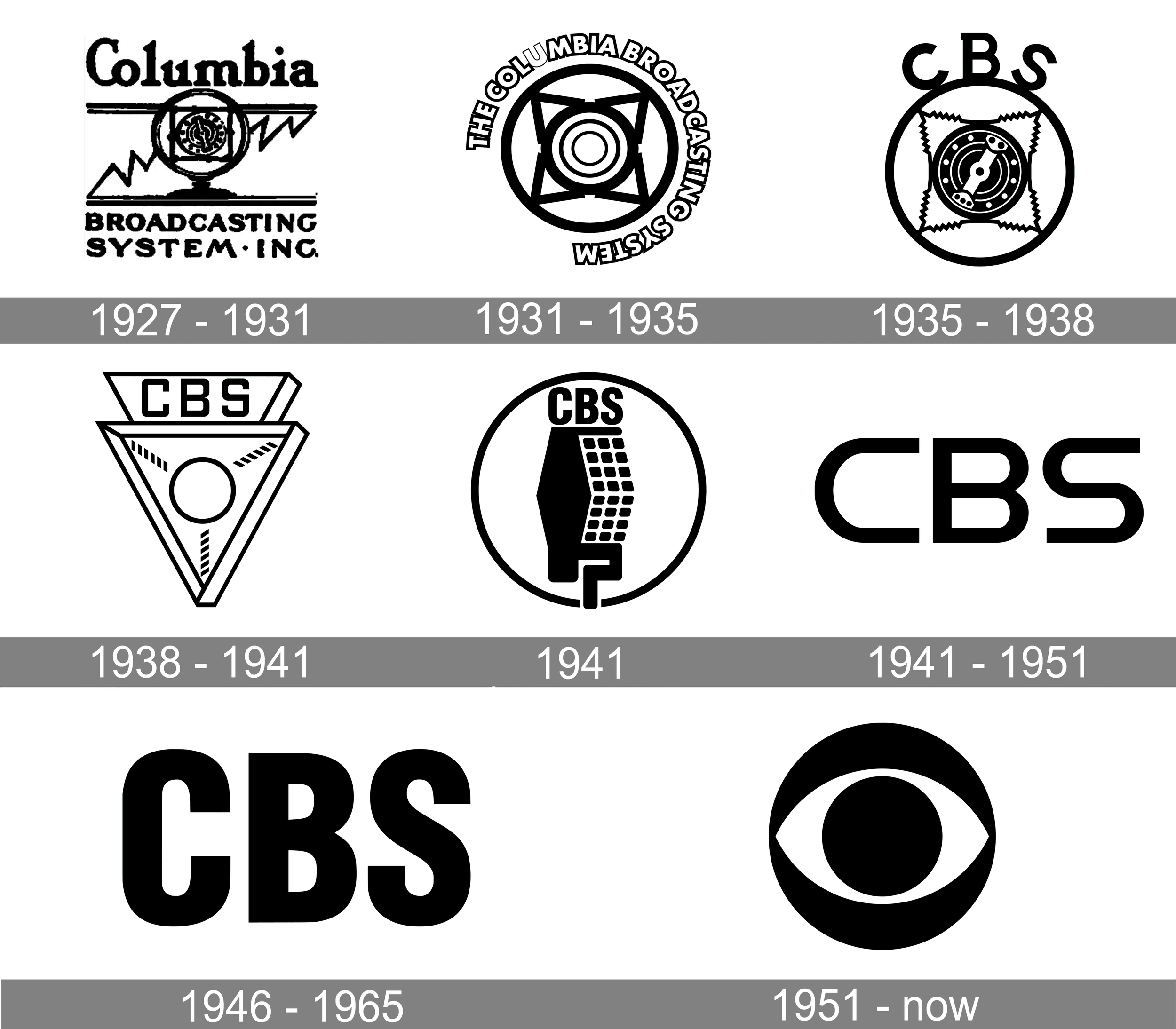
As mentioned before, knowing a little background about the subject can help direct how you make a brand more relevant and relatable. News logos are very interesting to look at because you can see how symbols and imagery changed over time, as technology changed.
To the left is a look at the history of CBS’s network logo. Their first five logos focused on radio-based imagery. This is because radio was the technology of the day and therefore recognizable to people. After 1941, when film became more widely used, they stepped away from focusing on radio, but needed a logo that could be used by radio networks and film. After 1951, they evolved to their iconic “eye” logo. While there can be many interpretations of the eye as “keeping an eye on things” (for example), another influence can be the increasing popularity of visual news medias.
What I took from this lesson is use recognizable imagery and keep it consistent. For example, our creative director requested stay away from logotypes commonly associated with printed news (i.e. The New York Times). The newest generation of adults didn’t grow up with printed newspapers as their main source of information and so it doesn’t make sense to incorporate in a rebrand focusing on being relatable to younger generations (under 50). It’s a tricky balancing act, however, because you don’t want to isolate your majority audience (those over 50). To balance properly, let’s take a look at the numbers.
In 2023, Pew Research Center collected data relevant to local TV news stations and found that an overwhelming amount of viewers are over the age of 50. This is the problem most local news stations face:
Their majority audience is aging/dying out, creating uncertainty for sustainability as an industry and “need” in the community.
There is a strong disconnect between the views of those 18-30 and those 50+, creating challenges in making content that can appeal to either age group.
With technology evolving at the current rate, many stations struggle financially and logistically to provide more modern platforms (apps, social media, etc.) that appeal to potential younger viewers.
Age Demographics for Regular News Viewers
According to a 2022 Knight Foundation/Gallup Poll, the saving grace of local news is the public’s trust of sources. 54% of American viewers trust local news stations compared to only 27% of Americans that trust national news networks. This is a key point for Atlanta News First as Gray Television ended the station’s link to CBS’s national news network, striving to stand out as the only locally owned station. By cutting ties with national news providers, Atlanta News First can maintain a more trustworthy reputation with local communities because they are not reverberating their parent companies’ opinions.
In with the new and how what we have learned influenced WANF’s redesign
There is so much that goes into a rebrand: new logos, new graphics, new color palettes, new websites, new technology, the list goes on. What I accomplish in doing my research before putting pen to paper or mouse to pixel is I have an understanding of what their purpose/role is, what their values are, and what their goals are.
What does Atlanta News First view as their purpose/role in the community/world?
Atlanta News First’s purpose doesn’t stray too far from the reason news platforms are meant to be: a source of information that focuses on local communities, from the individual to Georgia’s global influence. Specifically, however, they strive to be heavily involved with local businesses, charities, projects, and groups.
What are the values of Atlanta News First and what are they trying to create?
Atlanta News First has always valued community above all else. Digging deeper, they want to be seen as a trustworthy, original, non-biased source of information for people (in their case, the Metro-Atlanta area). Their brand stands for not treating people like strangers but like a united community that helps one another.
What are the goals that Atlanta News First hopes to achieve?
Atlanta News First is focused on being a different kind of news. They strive to provide stories that aren’t barely scratching the surface but rather digging deep and making a difference. They want to restore the trust of younger audiences and loyal viewers in local reporting because it isn’t about simply sharing information but doing the research, asking and answering questions, and making sure that people feel supported where they live every day.